Family prototype · tablet app
Spellsail
Hear it. Write it. Check it.
A tablet app for weekly spelling practice. You take a photo of the list, the app reads each word out loud in a sentence, your kid writes it by hand, and Claude checks the handwriting.
- from a written spec to a working prototype
- 1 day
- times the handwriting checker sees the word it's checking
- 0
- screen sizes in the layout tests: 1,292 checks, no issues
- 19
- subjects: spelling, and times tables answered in handwriting
- 2
The problem
Spelling practice at home means a parent reading words out loud, a kid writing them on paper, and someone checking every letter. Typing apps don't help much, because the real test at school is handwritten.
What it does
- Take a photo of the week's list. The app pulls out the words and writes a short, kid-friendly sentence for each one, which a parent can edit.
- It says each word in its sentence. Your kid writes it with a stylus or a finger, and the app checks it letter by letter.
- When a word is wrong, the app shows what they wrote next to the right spelling. They trace it twice, then try once more from memory. Missed words come back at the end.
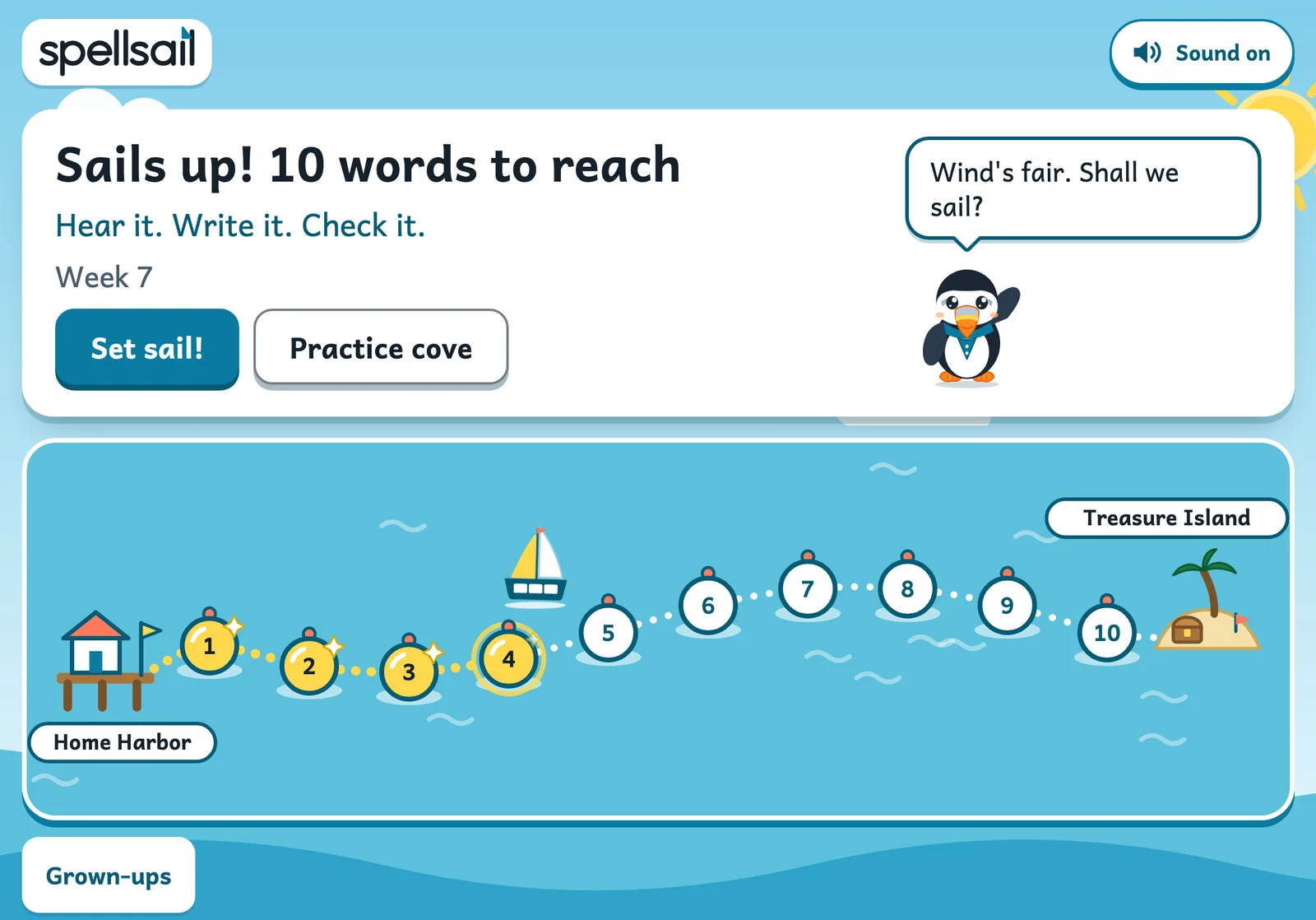
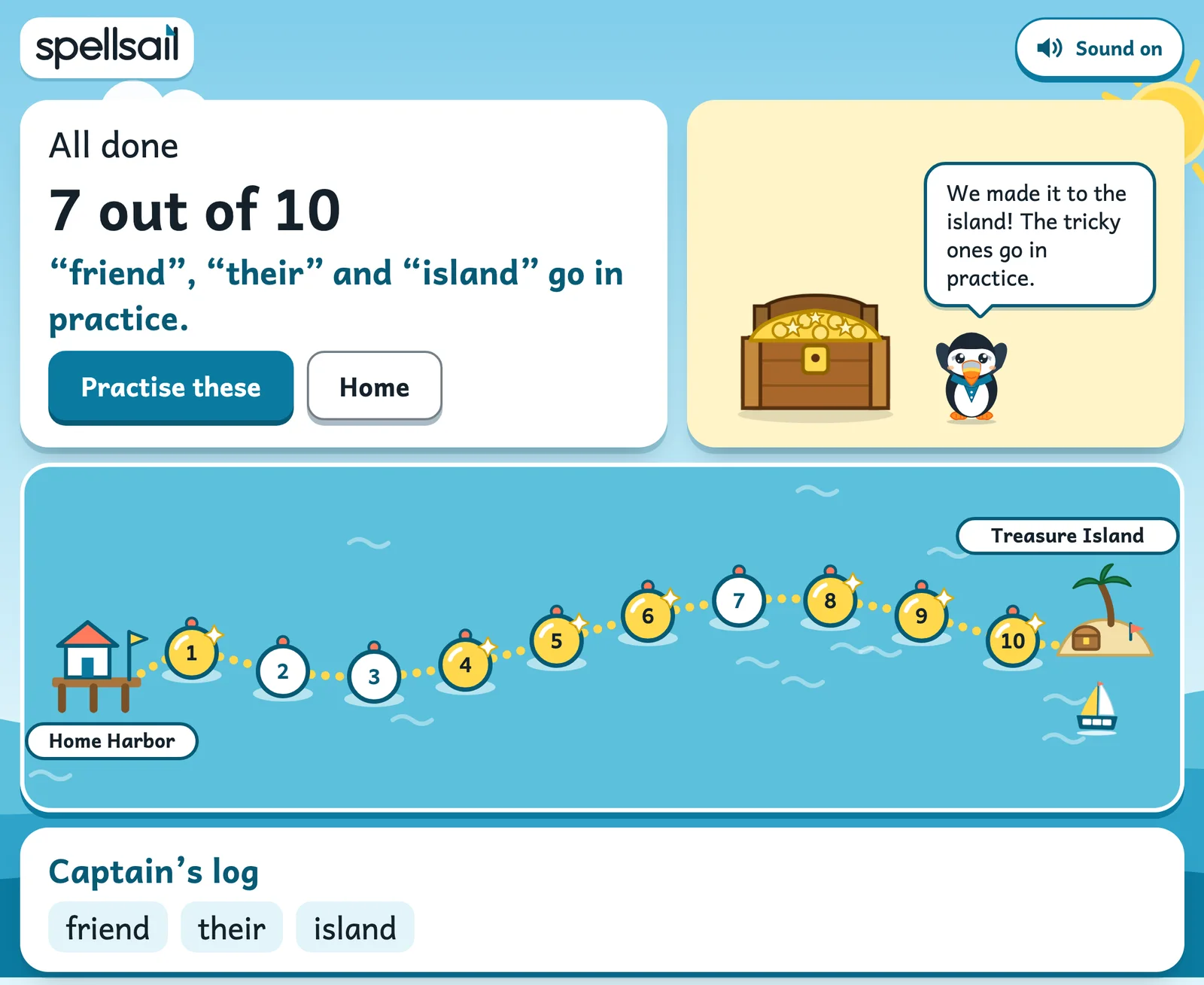
- A map, a puffin named Pip and gentle sound effects turn the week's list into a boat trip to Treasure Island.
- Times tables work the same way. Your kid writes each answer by hand and the app reads the numbers.
Decisions I made
The checker never sees the answer
Claude only writes down exactly what the kid wrote, letter by letter. It's never told the right word, so it can't lean its reading toward the right spelling. The app does the comparing on the device.
Handwriting instead of typing
The test at school is on paper, so practice should be too. It works on an iPad with an Apple Pencil, or a cheap Fire tablet with a finger.
Skip the AI when simple math works
Tracing is checked on the device by measuring how much of each letter the strokes cover and how much ink stays on the letter. It's instant and free.
Collect as little as possible
Families sign up by invite only, with a family name and a PIN. There's no email address. Progress syncs so it follows a family from one device to another, and each family has a daily limit on AI use. Apps for kids under 13 come with real privacy rules, so I keep as little data as I can.
The first version was boring
It worked, but when I tried it, it was dull. The next round turned it into a boat trip, with a map, a mascot and rewards, and it still respects the reduced-motion setting.
Another look
How I built and tested it
- Every piece of work had its own checklist and was checked by a separate agent.
- The checker failed the "make it fun" round twice before it passed. One reason: the boat could cover the numbers on the map. The layout tests now check decorations against content at 19 screen sizes, with deliberately broken cases to prove the test works.
- A fake-AI mode makes the full app tests repeatable. A separate live test sends sample handwriting through Claude, including misspellings, backward letters and scribbles.